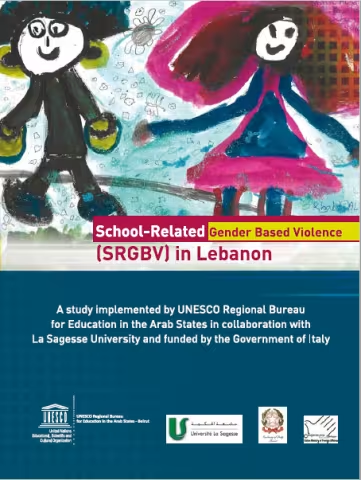
It is well known that the cultural norms and the patriarchal society in Lebanon contribute to encouraging discrimination and any form of violence against women and children.
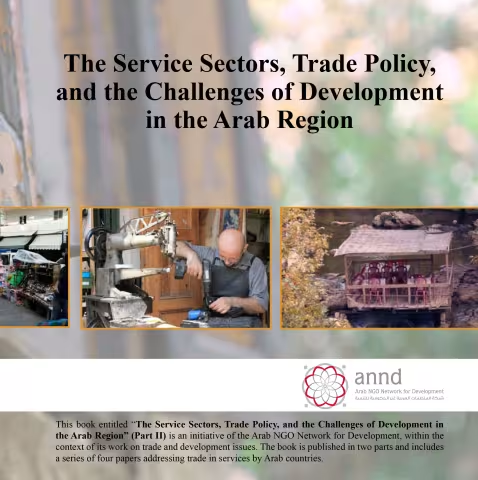
This book entitled “The Service Sectors, Trade Policy, and the Challenges of Development in the Arab Region” (Part II) is an initiative of the Arab NGO Network for Development, within the context of its work on trade and development issues.
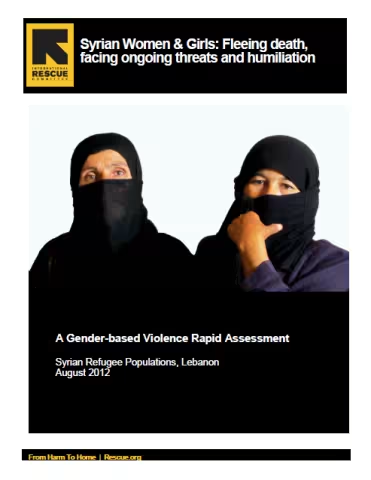
This Gender-based Violence Rapid Assessment conducted by International Rescue Committee in 2012 focuses on risks and violence faced by women and girls among the Syrian refugee population within Lebanon.
The Strategic Planning is based on the findings of fieldwork carried out in several villages in Dinnieh, which aimed at identifying the major characteristics of the region in different fields.
This brochure presents a brief introduction to the Universal Periodic Review (UPR) process and introduces the different stages of possible engagement by civil society groups with the process.
This resource is a United Nations Relief and Works Agency for Palestine Refugees in the Near East (UNRWA) reference training manual for frontline staff on how to work with GBV survivors.
The Sphere Project is an attempt by the operational agencies of the international humanitarian community to define common standards for the provision of assistance in a spirit of quality and accountability. But Sphere is not just a manual of humanitarian good practice.
This case study book entitled “Cases of Femicide before Lebanese Courts” was written by Azza Charara Baydoun and published by KAFA (enough) Violence & Exploitation in 2011.
Although Lebanon is known in the Middle East for its relative political openness and for the degree of freedom Lebanese women enjoy, it paradoxically has one of the lowest rates of women’s political engagement in the region.
The International Men and Gender Equality Survey (IMAGES) is a comprehensive household questionnaire on men’s attitudes and practices – along with women’s opinions and reports of men’s practices – on a wide variety of topics related to gender equality.
The Sphere Project was initiated in 1997 by a group of NGOs and the Red Cross and Red Crescent Movement to develop a set of universal minimum standards in core areas of humanitarian response: the Sphere Handbook.
The Millennium Development Goals (MDGs) are a set of eight specific objectives for enhancing the human condition, including goals of poverty reduction and improvement in education, gender equality, health, and environmental quality among others.
Accountability has many meanings. Traditionally, it was understood as the was in which those who authorised others to act on their behalf made sure that authority was being used as agreed.
ان كتاب "الدليل إلى معرفة أحوال المرأة" الصادر عام 2010،هو ثمرة للتعاون القائم بين الهيئة الوطنية لشؤون المرأة اللبنانية وصندوق الأمم المتحدة الإنمائي للمرأة ، في إطار البرنامج الإقليمي لدعم الحقوق الإنسانية للمرأة UNIFEM في مناطق المغرب والمشرق.
This document is the outcome of a workshop organised by UNRWA on the 31st of March 2010 on “Community of Practice in Building Referral Systems for Women Victims of Violence”.
The Central Administration of Statistics (CAS) and the World Bank organized a workshop entitled "Gender Statistics in Lebanon: Current Situation and Future Needs," which took place on June 17, 2010.
This edition of the Global Education Digest (GED) explores the changing patterns in gender and schooling throughout the formal education system – from primary to tertiary education levels.