Resources

Theme
Displaying 1 - 20 of 47
National
Publishing Date
تُعتبَر تكنولوجيا المعلومات والاتّصالات ضروريةً لمساعدة المنظّمات والمجموعات القاعدية على التواصل والتخطيط للبرامج والمبادرات وتنظيمها وتنفيذها ورصدها وتطويرها بشكلٍ أفضل. يسعى هذا الدليل إلى تلبية الاحتياجات الأوّلية لمختلف منظّمات المجتمع المدني الصغيرة والمتوسّطة الحجم، من أجل استخدام التكنولوجيا في مهامها اليومية على نحو أفضل. يتوجّه الدليل إلى أعضاء فِرَق العمل على اختلاف أدوارهم في المنظّمة، ويفترض أنَّهم يتمتّعون بمعرفة أساسية بديهية حول الوسائل والتقنيات الرقمية. يتناول هذا الدليل كيفية استخدام برامج مايكروسوفت أوفيس (MS Office)، وجوجل سويت، والرصد والتقييم باستخدام نماذج جوجل أو...
National
Publishing Date
Information and Communication Technology is necessary to help organisations, as well as grassroots collectives to better communicate, plan, organise, implement, monitor, and develop programmes and initiatives. This guidebook strives to fulfill the preliminary needs of different small to medium CSOs in better using technology in their daily tasks. It targets team members fulfilling different roles in an organisation, and assumes the team has basic digital literacy. This guidebook covers the use of MS Office, working on the Google Suite, Monitoring & Evaluation using Google Forms or...
National
Publishing Date
This report aims to provide statistical and analytical tools for the recovery community working in North Lebanon, specifically those working with the Nahr el-Bared displaced and returnee population. The information will allow for better assessment of current needs and gaps, which will eventually support the development of appropriate strategies of intervention on both the short and long term.
National
Publishing Date
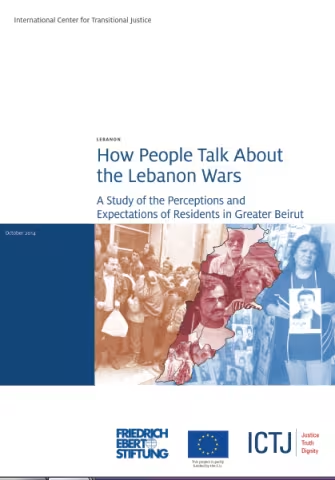
The July war 2006, lasted 34 days, and led to the displacement of 915,762 (almost 25% of the Lebanese population) persons, relocating into public and private schools all over the country. With the coming into force of the cease fire in August 14th 2006, there was a rapid return of the displaced to the south.
National
Publishing Date
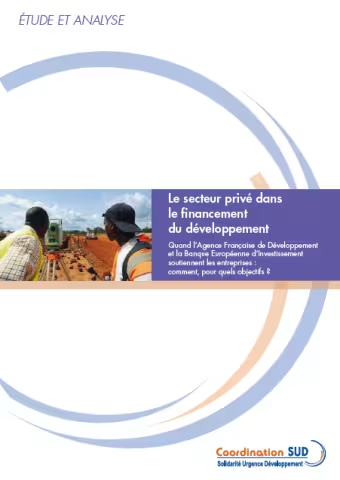
Les politiques de coopération au développement des bailleurs étatiques placent de plus en plus le secteur marchand comme un acteur clé du développement, à la fois comme un partenaire financier ou opérationnel mais aussi comme un objectif en soi. Sa croissance dans les pays du Sud, que ce soit dans le domaine productif ou de la fourniture de services, y compris pour de la délégation de services publics ou l’offre de services bancaires, est considérée comme un indicateur positif. Les gouvernements des pays membres de l’UE cherchent ainsi à maximiser son rôle comme catalyseur ou «substitut» de...