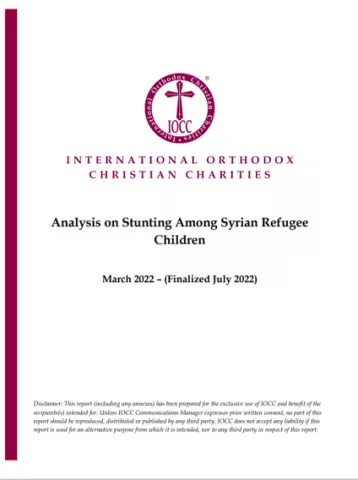
Findings in the "Analysis on Stunting Among Syrian Refugee Children" showed that risk factors perceived to be contributing to stunting levels among Syrian refugee children included those at the individual and household level with poor maternal nutrition, household food insecurity and inadequate complementary feeding practices as the factors perceived to be contributing the most to stunting among Syrian children. On the other hand, at the institutional and community level, market food prices, poverty, income, employment and livelihoods were the factors perceived to be contributing the most to...
We Rise through Art is a handbook produced under the project with the same title in response to Beirut's explosion, highlighting activities and tools that can be adopted by trainers, coaches and facilitators with pre-adolescents and children under arts, sports and recreation.
Beirut Explosion: Greatest Tragedies Come With Greatest Acts of Kindness.
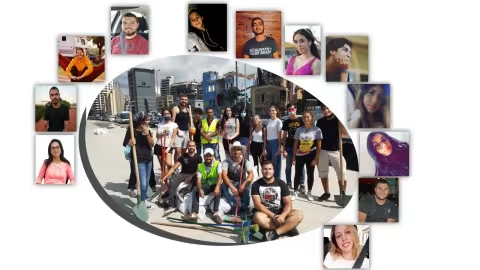
Youth from a Sports and Youth Association (Chabibeh Sporting Club) become volunteers and share stories of compassion and pain mixed together to shed light on the darkest hour of their country.
We Play for Peace is a handbook produced under the project with the same title highlighting activities and tools that can be adopted by trainers, coaches and facilitators with pre-adolescents and children under arts, sports and recreation.
This report aims to provide statistical and analytical tools for the recovery community working in North Lebanon, specifically those working with the Nahr el-Bared displaced and returnee population. The information will allow for better assessment of current needs and gaps, which will eventually support the development of appropriate strategies of intervention on both the short and long term.
This report is based on answers to two surveys carried out in Lebanon in 2018 as part of a project to understand how refugees and humanitarian staff perceive the impact of the reforms enshrined in the Grand Bargain.
Only a handful of studies in Lebanon have shed light on the changing gendered dynamics within the refugee families by comparing gender roles, expectations, and practices before and after displacement (as result of armed conflict).