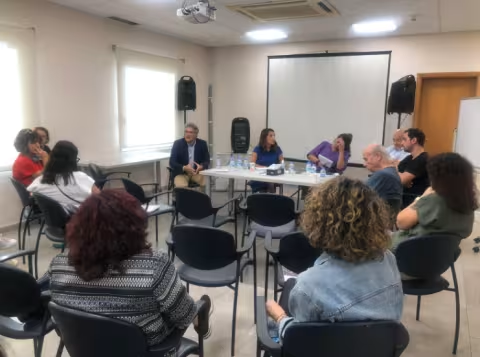
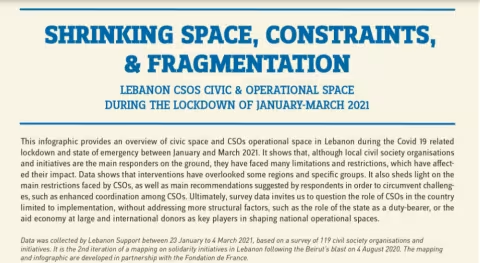
On September 25, 2025, CeSSRA convened a roundtable discussion titled “The End of the Grant Era: Implications and Potential for Civil Society Actors in Lebanon,” bringing together local civil society actors to reflect on the shifting funding landscape and its impact on the sector.
أطلقت لجنة الإنماء الوطني برنامج "نهضة" الزراعي في تموز 2020 استجابة للوضع الإقتصادي المتردي في لبنان. حددت الجمعية أن السبب الرئيسي لذلك التردي، هو الإتكال الكبير في استهلاك المنتجات الزراعية الاستراتيجية على استيراد تلك المُنتجات من الخارج. الحل المباشر يكون في التحول التدريجي للمقومات الإقتصادية الزراعية إلى نموذج إنتاجي تصاعدي وفق خطة طويلة الأمد، يتم ترشيدها بأهداف محددة في الأمن الغذائي، وتنفيذها في خطة علمية منهجية تحرص على استدامة النتائج المتوخاة، لتتكامل مع النسيج الإقتصادي للبنان. يتم مراقبة وضبط نجاح وتقدم هكذا خطة عبر قياس دوري لمكونات محددة وواضحة، استناداً لمعلوماتٍ دقيقة تكون...
The report examines how economic and financial policies of the EU affect the economies of Southern Mediterranean countries. It’s interesting to note the shortcomings of these policies with regard to civil and political rights.
The second report is an evaluation of civil society initiatives on economic and social rights, including a series of civil society initiatives focusing on
The report entitled challenges for civil society and the promotion of economic and social rights, brings together recommendations from civil society actors and academics to strengthen Euro-Mediterra
This report presents findings from a survey conducted from 3-11 July, 2017 with three distinct refugee groups in Lebanon: Syrian refugees; Palestine refugees from Syria; and Palestine refugees from Lebanon.
The Lebanon Host Communities Support Project (LHSP) is a multi donor programme aimed at increasing stability and building the capacity of communities affected by the Syrian crisis to address tensions, prevent conflict and ensure peaceful co-existence.
This working paper seeks to document and analyse collaboration mechanisms between local authorities and humanitarian actors in addressing the Syrian refugee crisis in urban and peri-urban settings in Lebanon.
Since the Syrian conflict began in 2011, 11 million people have been internally displaced or have fled to neighboring states. This has put an incredible strain on the hosting societies, particularly in Lebanon,Jordan, Iraq and Turkey.