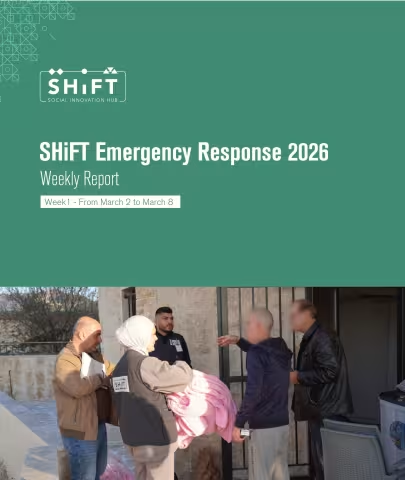
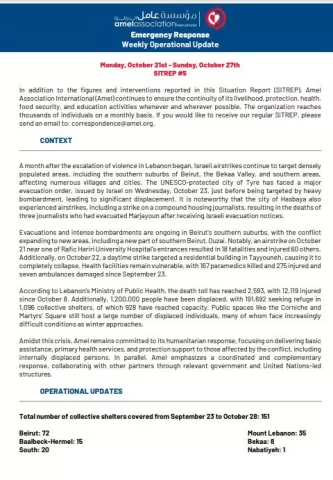
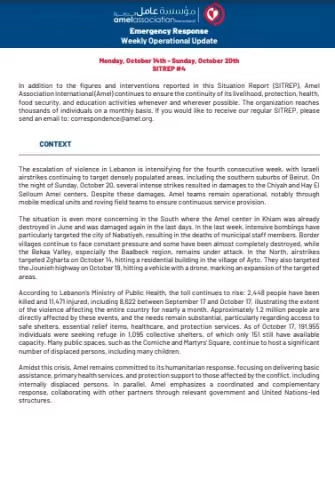
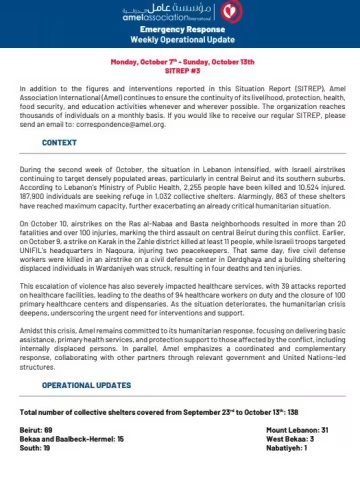
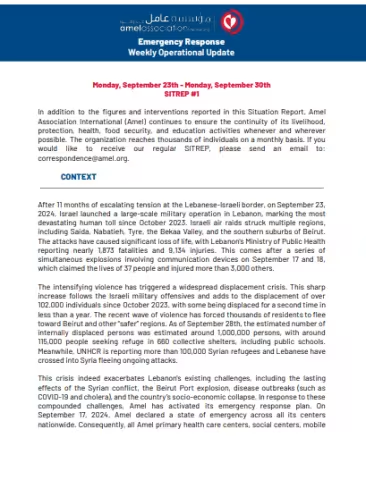
SHiFT launched its emergency response on March 2, 2026, to support families displaced by the escalation of violence in Lebanon. Thousands of people fled their homes with minimal belongings and are now sheltering in public schools and collective shelters across the country. Over 700,000 internally displaced people (IDPs) have been registered, including 119,700 staying in collective shelters, highlighting the scale of humanitarian needs.
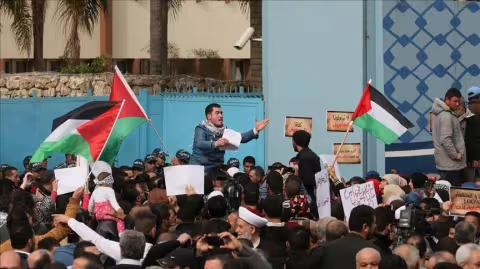
ككل عام تطلق المؤسسة الفلسطينية لحقوق الانسان (شاهد) تقريرها السنوي للعام 2023 حول واقع اللاجئين الفلسطينيين في لبنان، تطرح فيه الأرقام والوقائع الموثقة وتضعها بين يدي صانع القرار المحلي والدولي.
هذا التقرير هو خلاصة للجهود البحثية والمتابعات الميدانية لفريق عمل مؤسسة (شاهد) خلال عام كامل.
The first toolbox: Conflict Sensitive Cash
Assistance in Lebanon aims to support
partners to ensure that cash-based
assistance does not inadvertently do
harm and is conflict sensitive. The toolbox
is complementary to the Guidance Note:
Getting Started with Conflict Sensitivity in
Lebanon which introduces basic conflict
sensitivity elements and practical tips for
getting started with conflict sensitivity.
within the unique context of Lebanon.
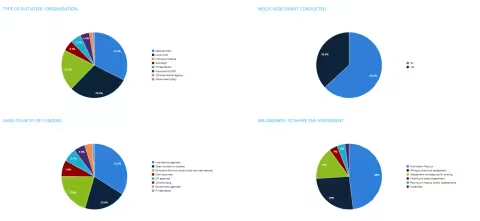
The mapping below documents organisational and individual solidarity initiatives and interventions in the aftermath of the Beirut blast on August 4th, 2020.
Each initiative is mapped according to a set of categories, including type of initiative, area of intervention, geographic area covered, needs assessment conducted, and identified priorities. The below data aims to enhance transparency and collaboration among civil society actors, but also strengthen coordination, in order to reduce duplication and identify priorities for action.
Data was collected by Lebanon Support (through Daleel...
This report aims to provide statistical and analytical tools for the recovery community working in North Lebanon, specifically those working with the Nahr el-Bared displaced and returnee population. The information will allow for better assessment of current needs and gaps, which will eventually support the development of appropriate strategies of intervention on both the short and long term.
The July war 2006, lasted 34 days, and led to the displacement of 915,762 (almost 25% of the Lebanese population) persons, relocating into public and private schools all over the country. With the coming into force of the cease fire in August 14th 2006, there was a rapid return of the displaced to the south.