This policy brief was developed as a deliverable in the project “Fair Game: Theatre of the Oppressed for Youth Empowerment” funded by the European Union. It tackles the topic of bullying in schools and offers recommendations drawn from the field experience in Lebanon that focused on the methodology of Legislative Theatre to raise awareness on bullying in schools and advocate for better policies.
Findings in the "Analysis on Stunting Among Syrian Refugee Children" showed that risk factors perceived to be contributing to stunting levels among Syrian refugee children included those at the individual and household level with poor maternal nutrition, household food insecurity and inadequate complementary feeding practices as the factors perceived to be contributing the most to stunting among Syrian children. On the other hand, at the institutional and community level, market food prices, poverty, income, employment and livelihoods were the factors perceived to be contributing the most to...
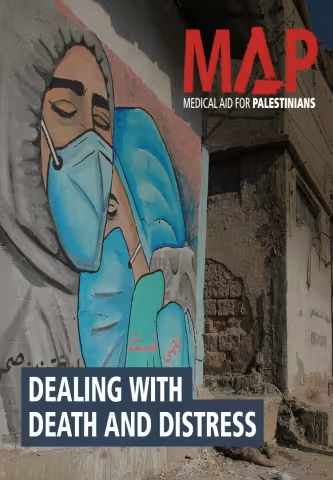
Based on interviews conducted with doctors, nurses and other frontline staff across West Bank, East Jerusalem and Gaza, the paper exposes how the stresses and strains of protracted COVID-19 response have compounded existing challenges of working in a health system already rendered fragile, fragmented and resource-deprived by perpetual occupation and blockade, to cause a deepening wellbeing crisis among the Palestinian healthcare workforce.
Beyond the mere provision of healthcare, the right to health is entrenched in human rights and encompasses underlying determinants of health (including gender equality, right to food, right to housing for example), freedoms and rights, and entitlements such as equal opportunity to access the highest attainable standards of health.
الحقّ في الصحّة هو حقٌّ مُكرَّس من حقوق الإنسان، ولا يقتصر على الرعاية الصحّية. يتضمّن مجموعة من المُحدِّدات الأساسية للصحّة (بما في ذلك المساواة الجندرية، والحق في الغذاء، والحق في السكن على سبيل المثال)، والحريات والحقوق والاستحقاقات مثل تكافؤ الفرص للوصول إلى أعلى...
The healthcare system in Lebanon is fragmented, exclusionary, and highly privatised.
Although there are multiple social protection schemes offering access to different healthcare benefits, some segments of the population, including unemployed, elderly, workers in the informal sector, migrants workers, and refugees have limited and unequal access to healthcare benefits and coverage.
نظام الرعاية الصحية في لبنان مجزأ، باهظ الكلفة ومخصخص إلى حد كبير. رغم وجود العديد من برامج الحماية الإجتماعية التي تغطي كل منها تقدمة مختلفة في مجال الرعاية الصحية، إلا أن بعض شرائح السكان، بما في ذلك العاطلين عن...