Lebanon has had an ambiguous approach to the more than one million Syrians seeking protection in the country since 2011. The country is neither party to the 1951 Convention relating to the Status of Refugees, nor does it have any national legislation dealing with refugees.
Having limited legal status has direct negative consequences for Syrian refugees’ access to protection and assistance during their stay in Lebanon. Limited legal status also increases the risks of abuse and exploitation. Lebanon is not a signatory to the 1951 Refugee Convention, hence the limited legal protection for refugees and asylum seekers in Lebanon, although it is bound by the customary law principle of non-refoulement and by the obligations of the human rights treaties which it has signed and which are incorporated into its Constitution. International standards under these obligations...
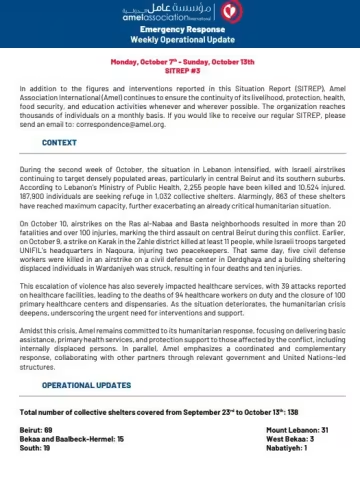
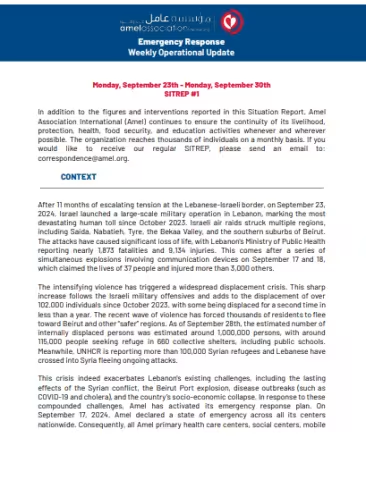
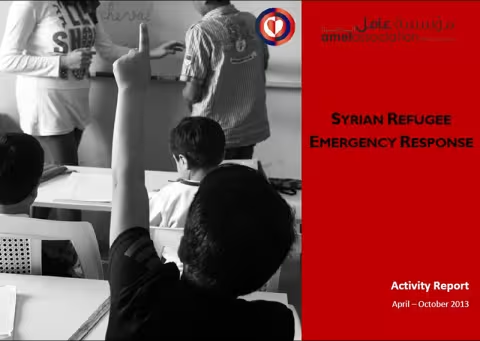
Amel Association International is publishing its second activity report on the activities undertaken by the Syrian Refugee Emergency Response programme from April 2013 to October 2013.
In March 2013, the United Nations High Commissioner for Refugees (UNHCR) registered 48,000 Syrian refugees, bringing the number of refugees registered and awaiting registration with the Office to just under 400,000. However, the Lebanese Government estimates that approximately one million Syrians are seeking refuge in the country. The humanitarian situation is deepening as the number of Syrian refugees in the region could double or triple by the end of the year if no solution is found. In response, Amel is stepping up the assistance to Syrian refugees in Lebanon by providing primary healthcare...
There are no official statistics but there may be more than 40,000 Iraqi refugees in Lebanon. Lebanon already hosts some 400,000 Palestinians for whom no durable solution is in sight.
The study upon which this article is based analyzes the status of Arab women in general, gender relations in the Middle East, and the situation of Arab women with disabilities, based on available disability statistics from a few selected countries and the author's observations