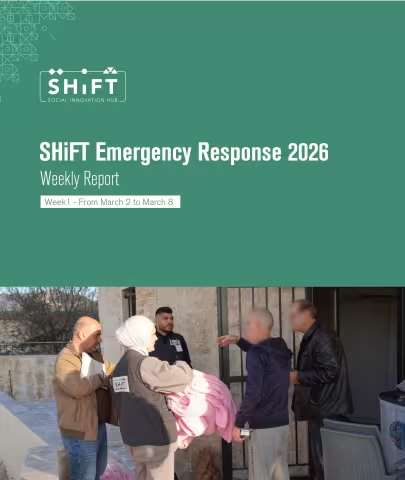
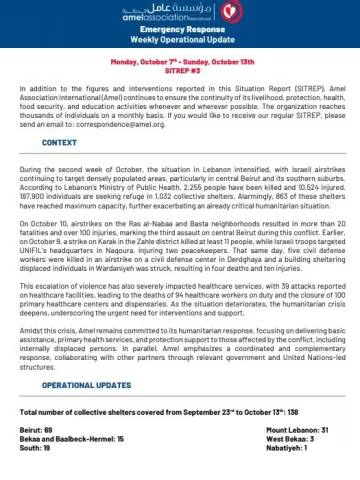
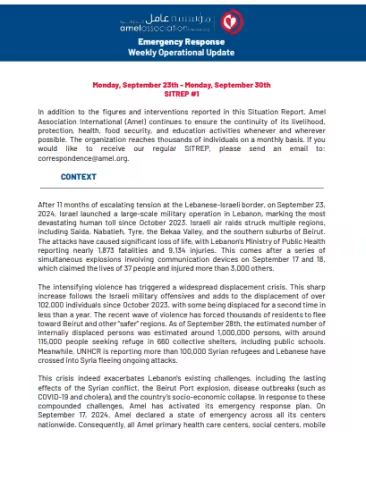
SHiFT launched its emergency response on March 2, 2026, to support families displaced by the escalation of violence in Lebanon. Thousands of people fled their homes with minimal belongings and are now sheltering in public schools and collective shelters across the country. Over 700,000 internally displaced people (IDPs) have been registered, including 119,700 staying in collective shelters, highlighting the scale of humanitarian needs.
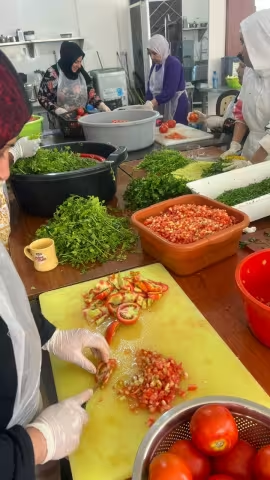
In the wake of Lebanon’s compounded humanitarian crisis, the Community Kitchen Initiative emerged as a localized, life-saving response to ensure that food-insecure populations had access to hot, nutritious, and culturally appropriate meals. Operational since March 2025 till present, this intervention served as a vital daily service across Nabatiyeh, South Lebanon, Mount Lebanon, and Baalbek-Hermel. Led by SPHERE Building Tomorrow (SBT), the project leveraged community-based kitchens and volunteer networks to deliver food assistance while promoting livelihoods and strengthening local food...
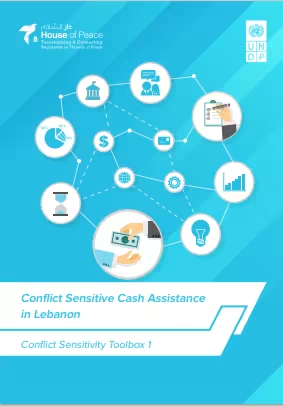
The first toolbox: Conflict Sensitive Cash
Assistance in Lebanon aims to support
partners to ensure that cash-based
assistance does not inadvertently do
harm and is conflict sensitive. The toolbox
is complementary to the Guidance Note:
Getting Started with Conflict Sensitivity in
Lebanon which introduces basic conflict
sensitivity elements and practical tips for
getting started with conflict sensitivity.
within the unique context of Lebanon.
Findings in the "Analysis on Stunting Among Syrian Refugee Children" showed that risk factors perceived to be contributing to stunting levels among Syrian refugee children included those at the individual and household level with poor maternal nutrition, household food insecurity and inadequate complementary feeding practices as the factors perceived to be contributing the most to stunting among Syrian children. On the other hand, at the institutional and community level, market food prices, poverty, income, employment and livelihoods were the factors perceived to be contributing the most to...
Information and Communication Technology is necessary to help organisations, as well as grassroots collectives to better communicate, plan, organise, implement, monitor, and develop programmes and initiatives.
This guidebook strives to fulfill the preliminary needs of different small to medium CSOs in better using technology in their daily tasks. It targets team members fulfilling different roles in an organisation, and assumes the team has basic digital literacy.
This guidebook covers the use of MS Office, working on the Google Suite, Monitoring & Evaluation using Google Forms or...
تُعتبَر تكنولوجيا المعلومات والاتّصالات ضروريةً لمساعدة المنظّمات والمجموعات القاعدية على التواصل والتخطيط للبرامج والمبادرات وتنظيمها وتنفيذها ورصدها وتطويرها بشكلٍ أفضل.
يسعى هذا الدليل إلى تلبية الاحتياجات الأوّلية لمختلف منظّمات المجتمع المدني الصغيرة والمتوسّطة الحجم، من أجل استخدام التكنولوجيا في مهامها اليومية على نحو أفضل. يتوجّه الدليل إلى أعضاء فِرَق العمل على اختلاف أدوارهم في المنظّمة، ويفترض أنَّهم يتمتّعون بمعرفة أساسية بديهية حول الوسائل والتقنيات الرقمية.
يتناول هذا الدليل كيفية استخدام برامج مايكروسوفت أوفيس (MS Office)، وجوجل سويت، والرصد والتقييم باستخدام نماذج جوجل أو...